
 By
By Dubai, UAE, March 9, 2026
The crypto market moves in cycles. Shiba Inu, once a favorite among retail traders chasing rapid gains, finds itself struggling after its burn mechanism went silent for two consecutive days. That pause in token removal has weakened a key narrative, leaving price action exposed to broader market sentiment. Meanwhile, Mutuum Finance is building a buyback-and-distribute mechanism around its DeFi ecosystem that directly rewards participants.
Shiba Inu Faces Stalled Momentum
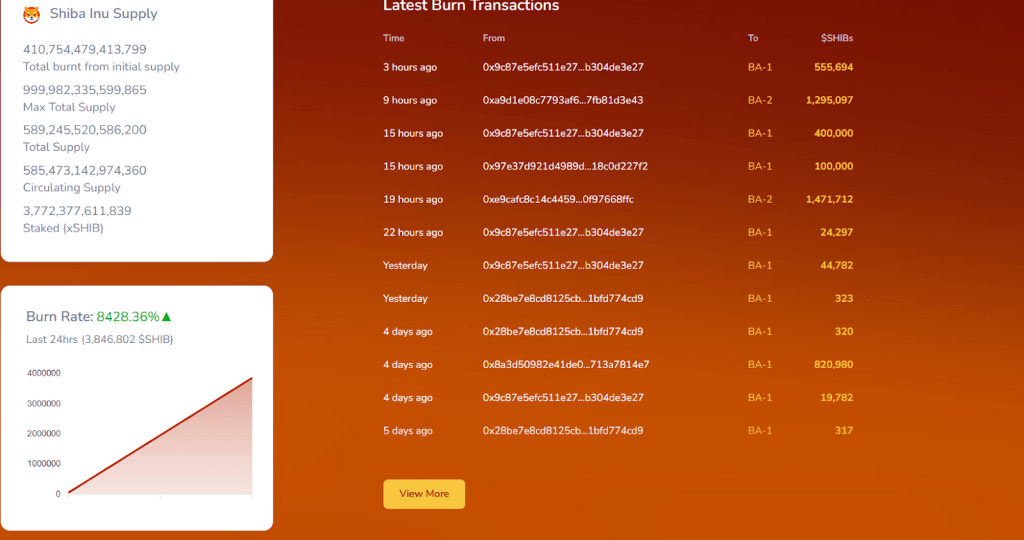
Trading activity around Shiba Inu has cooled considerably after its burn rate flatlined for two straight days. The token, now changing hands near $0.00000549, has shed nearly 3% over the past day and more than 6% across the last seven sessions. Without fresh token removals from circulation, the supply-reduction thesis that once excited short-term buyers has lost its urgency.
Shiba Inu currently hovers just above critical support at $0.0000054. If that level fails to hold, further downside could follow. Trading volumes remain muted, reflecting broader hesitation among market participants. Resistance sits near $0.0000068, though reclaiming that mark would require a clear shift in sentiment. From its October 2021 all-time high, the token has retraced substantially, underscoring how far the meme-coin sector has fallen from its peak.
Mutuum Finance
While Shiba Inu grapples with stalled tokenomics, Mutuum Finance is moving ahead with a buyback structure designed to reward ecosystem participants directly. Built on Ethereum, the protocol lets users lend assets to earn yield or borrow against existing holdings without selling them. More than 19,090 holders have already committed to the project, with total funding surpassing $20,780,000. The MUTM token price is currently $0.04.
Passive Yield
Mutuum Finance (MUTM) supports Peer-to-Contract (P2C) and Peer-to-Peer (P2P) lending for passive yields. The P2C model allows users to deposit assets into liquidity pools managed by smart contracts and earn interest from borrowing activity. The P2P model, on the other hand, enables direct lending between individual users. Instead of interacting with a liquidity pool, lenders and borrowers connect directly and agree on loan terms such as collateral requirements and repayment periods.
When users supply assets to Mutuum Finance lending pools, they receive mtTokens minted 1:1 to their deposits. Those tokens function as digital receipts that automatically accrue interest over time. If a supplier deposits $10,000 USDT, they receive $10,000 mtUSDT. As borrowers repay loans with interest, the value of mtTokens rises relative to the underlying asset. That mechanism lets suppliers earn passive income without active management.
Buyback-and-Redistribute Model
Mutuum Finance also channels a portion of protocol revenue toward open-market purchases of MUTM tokens. Those tokens are then distributed directly to participants who stake mtTokens in the safety module. Each buyback cycle creates recurring demand for MUTM while rewarding long-term contributors with additional tokens. That design aligns platform activity with tangible benefits for stakers.
Users who hold crypto but need liquidity can deposit collateral and borrow against it. Loan-to-value ratios typically range from 60% to 75%, meaning a user depositing $10,000 in ETH could borrow up to $7,500. Borrowers retain their original exposure while accessing funds for other opportunities.
Security Infrastructure
Smart contracts have undergone a full audit by Halborn. In addition, CertiK’s Token Scan currently assigns the MUTM token a score of 90/100. What’s more, the project has partnered with CertiK to offer a $50,000 bug bounty that will reward anyone who identifies and reports potential vulnerabilities in the MUTM smart contacts.
The broader rotation away from meme coins toward functional protocols reflects growing selectivity among traders. Meanwhile, Mutuum Finance offers a clear value proposition through its lending yield and a buyback-and-redistribute mechanism. The protocol is backed by audited code and open-source code.
Information contained on this page is provided by an independent third-party content provider. Binary News Network and this Site make no warranties or representations in connection therewith. If you are affiliated with this page and would like it removed please contact [email protected]

Comments