
 By
By 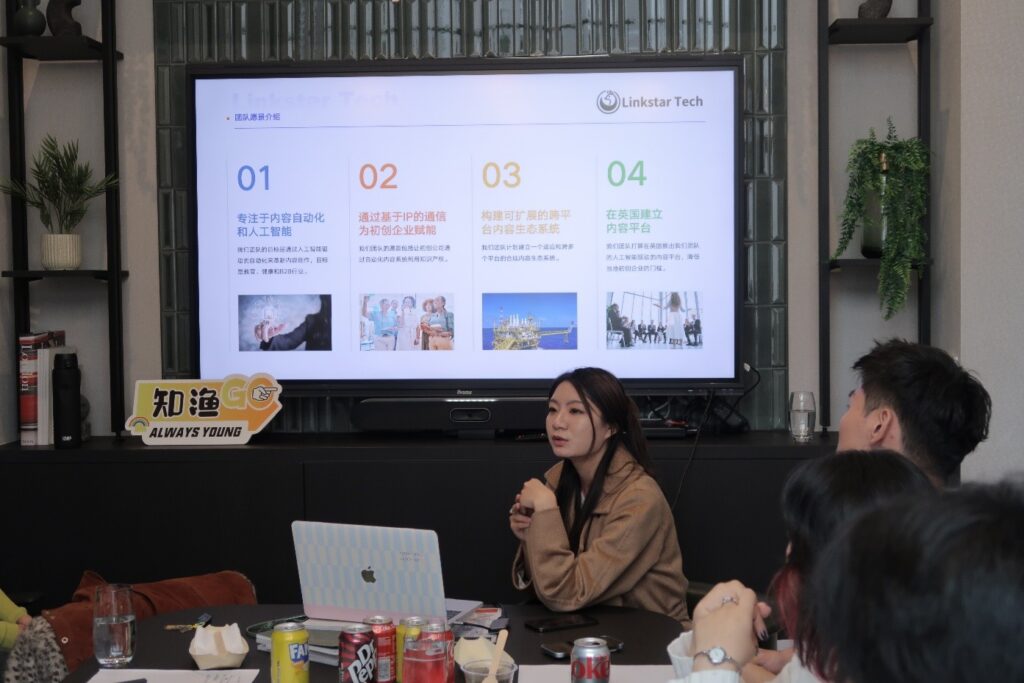
In recent years, an emerging system called Maxfuture has steadily gained traction among UK organisations seeking clearer, more consistent and more predictable digital workflows. Led by London-based founder Ling Zhu, the AI-supported system provides a structural foundation for teams to organise information, define execution logic and coordinate multi-platform tasks with greater accuracy. As organisations adopted the system, many reported faster planning cycles, clearer task progression and a significant reduction in repeated structural adjustments. Several projects built through Maxfuture-supported workflows also achieved strong online visibility, with multiple pieces surpassing 200,000 views across platforms such as Twitter and TikTok—a result driven by structural clarity rather than promotional activity.
Strengthening digital workflows within UK organisations
Through her work with UK teams across technology, education and service sectors, Ling observed that while organisations were capable of producing materials, the underlying workflows were often fragmented. Information moved inconsistently between individuals, platform differences created structural rework, and projects slowed not because ideas were lacking but because the execution logic itself was unclear.
These observations shaped the early direction of Maxfuture, which focuses on digital workflow architecture, information structure modelling, multi-platform logic adaptation and AI-assisted sequencing.
Teams using Maxfuture consistently describe their workflows as more organised, review cycles more manageable and execution more stable—an advantage for organisations navigating constant platform updates and increasing demands for digital clarity.
A company established before the system took shape
Before Maxfuture existed, Ling founded Qianteng Tech Media—a company specialising in AI-driven workflow systems, automation modelling and digital execution technologies—in 2021. Leading projects across multiple sectors, she repeatedly encountered the same structural issues: each project began from scratch, knowledge was scattered across individuals and alignment consumed most of the operational time. Platform differences added additional layers of rework, creating inconsistency and unpredictability.
These repeated patterns made clear that organisations did not simply need content—they needed a repeatable, structured method for executing digital tasks. This insight became the conceptual foundation for Maxfuture.
2023: Turning accumulated methods into an AI-supported execution system
In 2023, Ling began formalising her workflow methodologies into a unified system and led the design of Maxfuture’s technical architecture. Her work focused on how information should move through teams, how tasks should be broken down and how platform logic determines structure.
Within the system, AI serves practical purposes: detecting structural patterns, highlighting inconsistencies, accelerating repetitive workflow nodes and supporting decision-making in multi-step execution. Under Ling’s leadership, Maxfuture evolved into a stable form of digital execution infrastructure, used by organisations seeking clearer processes and more predictable outcomes.
Academic and commercial collaborations shaping the system
As Maxfuture matured, Ling’s leadership extended into collaborations that provided valuable environments for validating and refining the system. Her work with the University of Birmingham applied Maxfuture’s workflow logic to academic communication processes, offering a structured yet complex context for observing how digital tasks unfold. Continuing exchanges with Imperial College London, Cardiff University and academic groups within UCL broadened the system’s understanding of how research institutions organise and distribute information across multiple platforms.
In the commercial sphere, Ling collaborated with organisations such as Linkstar Tech, GGE Education Group and multiple UK-based service companies, integrating Maxfuture into their operational workflows. These partnerships produced high-frequency workflow data, allowing the system to grow through real operational behaviour rather than theoretical assumptions.
The combined influence of academic and commercial environments created a unique developmental path for Maxfuture—one shaped simultaneously by research-driven communication patterns and business-driven execution needs.
Translating complex processes into executable structure
One of Ling’s defining strengths is her ability to convert complex, multi-layered tasks into clear, executable workflows. She studies how information moves through teams, where execution delays commonly occur, how tasks can be broken into clearer units and how different platforms shape information architecture.
These observations form models that both humans and AI can act upon. Because Maxfuture is grounded in workflow behaviour rather than static templates, it performs consistently across industries—from technology teams coordinating product updates to education groups managing multi-platform digital communication. Many organisations note that their workflows become less dependent on individual experience and more aligned with a shared, predictable system of execution.
A system shaped by real usage, not trends
Maxfuture continues to evolve through real organisational use rather than trend-driven development. As more teams adopt the system, workflow patterns accumulate, enabling the platform to refine itself based on observed behaviour. This grounded and iterative approach gives Maxfuture the qualities of long-term digital infrastructure: stable, predictable and designed for everyday operations.
Ling’s collaborations with universities and UK businesses continue to serve as active testing grounds. Each partnership contributes new workflow patterns and structural insights, strengthening Maxfuture’s ability to function across diverse digital contexts.
A quiet shift in digital execution
In an era where organisations must maintain continuous digital output, the core challenge is rarely creativity—it is structure. Work slows when processes lack clarity, when teams do not share the same execution logic and when platform differences require repeated adjustments.
Ling Zhu’s work offers a structured, technical response to this challenge. Through AI-supported modelling and workflow automation architecture, Maxfuture provides teams with a more stable, more confident approach to managing digital tasks.
Its influence is subtle yet meaningful: by reinforcing the structure behind digital work, it enables organisations to operate more effectively in an increasingly complex digital environment.
Information contained on this page is provided by an independent third-party content provider. Binary News Network and this Site make no warranties or representations in connection therewith. If you are affiliated with this page and would like it removed please contact [email protected]



Comments